ZenWrist / Blog
Shangui Huaqian: The Mountain-Ghost Coin and the Mysterious Power of Cinnabar
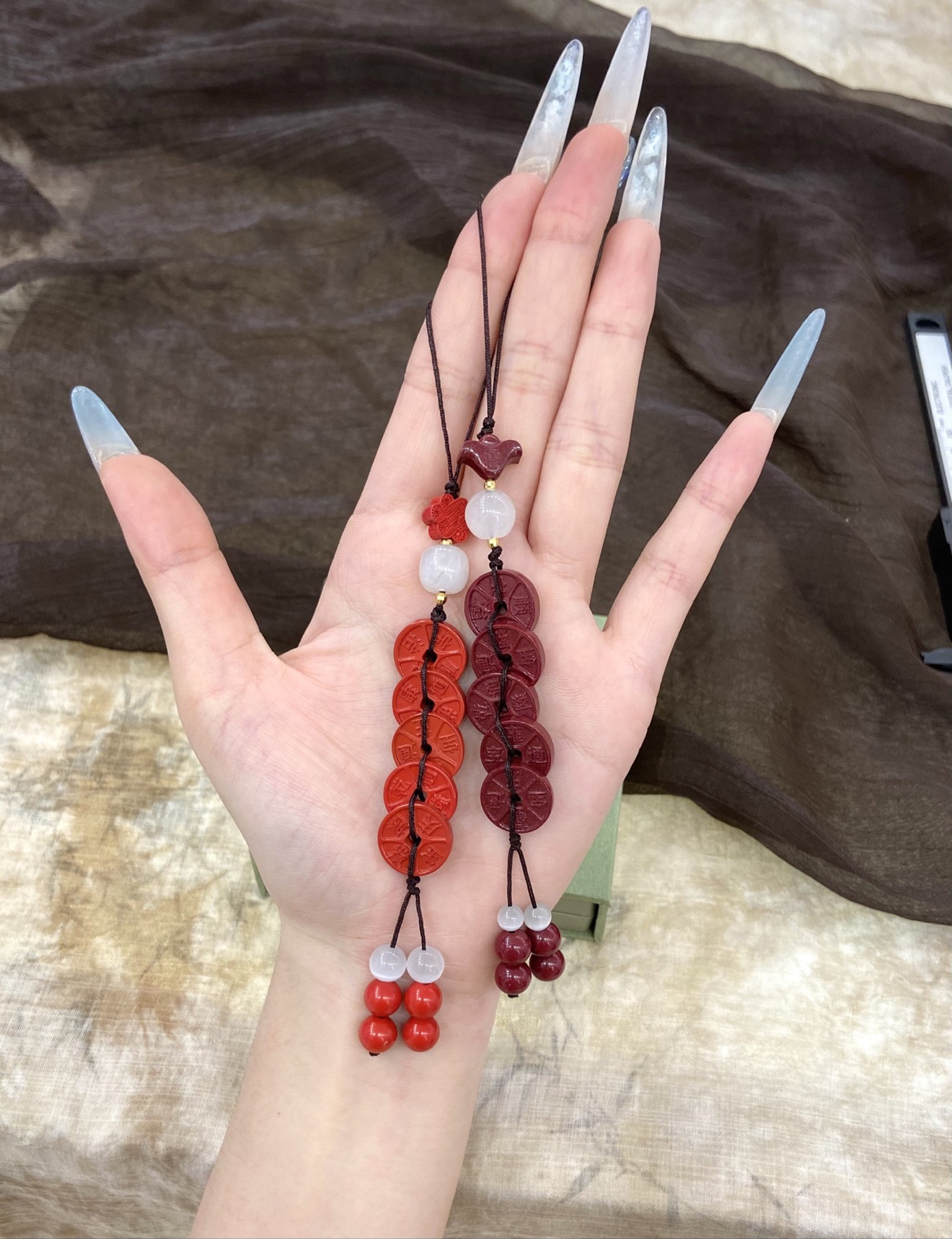
It looks like a coin, but it was never money. One face carries a talismanic inscription — the Mountain Ghost, acting on thunder's command — and the other a ring of thunder spirals around the eight trigrams. For centuries, people carried coins like this in a sleeve, sewn into a child's cap, or hanging on a cord at the chest. That quiet aura is a large part of what Western feeds now call the mysterious power of the East. This is the shangui huaqian: the mountain-ghost charm coin.
Last updated: 19 November 2026
First, the family it belongs to. Huaqian — "flower coins" — are the decorated branch of yansheng qian, charm coins cast not for spending but for blessing. They were given at births, weddings, birthdays, and New Year, hung in new houses, and carried as pocket pieces. The custom runs back well over a thousand years and peaked in the Ming and Qing dynasties; most shangui coins you will meet today are Qing-style, and the design has never really gone away.
Who is the Mountain Ghost? In the Songs of Chu, a poetry collection some 2,300 years old, the Mountain Ghost is a beautiful, elusive deity of the wild hills, arriving with the storm. In later folk talismans the figure changed rank: the Mountain Ghost became a spirit-general who commands lesser spirits. That is why his name was put on a coin — in folk belief, an inscription naming the commander was traditionally understood as an order for wandering evils to keep their distance.
The thunder half of the design matters just as much. The inscription is usually read as a command formula — the ghost moves by thunder's authority — and the reverse rings the eight trigrams with thunder spirals, the coiled meander pattern called leiwen. Thunder patterns are among the oldest motifs in Chinese art, cast into bronze vessels three thousand years ago, where they stood for the voice and power of heaven. A coin that joins the spirit-general, the thunder command, and the trigrams is, in the folk imagination, a small complete universe of protection — carried in a pocket.
Why carve it into cinnabar? Because the tradition has two halves — the talisman coin and the vermilion red — and cinnabar is where they meet. The mineral red of seals, charms, and temple calligraphy takes the coin design in carved form, on a hand-knotted cord. Our own cinnabar shangui pendant (#150, $127) is made exactly this way: purple-gold cinnabar, the ghost-and-thunder face on one side, worn at the chest. Its older cousin in the coin family is the five-emperor string — real Qing currency coins treasured in folk custom as a symbol of prosperity — which we make as the five-emperor coins hanging (#39).
How is it worn today? As a pendant on a cord, in the car, or kept in a pouch — and given at thresholds: a new job, a move, a zodiac year, a long journey. The gifting logic is the same as it was for the coin in a sleeve: a small, dense piece of good wishing that someone can carry without thinking about it.
One honest note from us: everything in this post is folk tradition and cultural symbolism — customs and stories handed down for centuries, shared the way they were told to us. We sell the craftsmanship and the meaning people find in it; no bracelet, pendant, or ornament is promised to change your luck, protect your health, or turn away misfortune.