ZenWrist / Guide
Cinnabar vs vermilion: what's the difference?
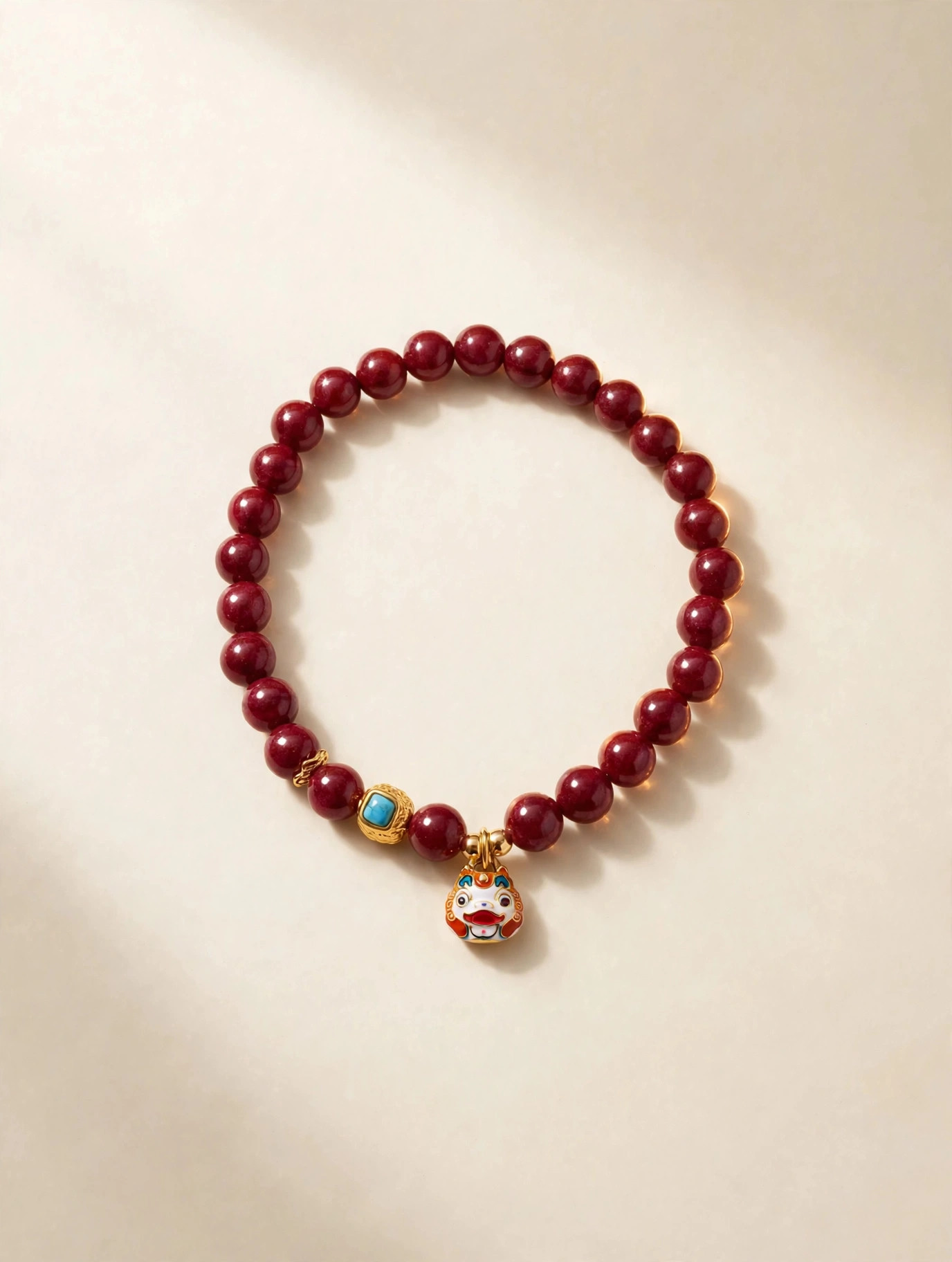
Cinnabar is the mineral; vermilion is the name of the red pigment made from it. The two words were used interchangeably for centuries — both are mercury sulfide (HgS) — but most red 'cinnabar' jewelry on the market today is lacquer or dyed resin, not the mineral. The table below compares all four, and the ZenWrist pieces and prices for each.
Last updated: 21 November 2026
1. The one-sentence answer
Cinnabar is the mineral; vermilion is the name of the red pigment made from it. Cinnabar — 朱砂 (zhūshā) — is mercury sulfide (HgS), a naturally occurring red mineral. Vermilion (银朱/朱红) is the bright-red pigment made from that mineral: ground from natural cinnabar, or synthesised as HgS. The two names were used interchangeably for centuries — museums note the same chemical composition, HgS, behind both words — so 'vermilion' on an old label can mean the mineral, and 'cinnabar' on a new listing can mean something else entirely. The table below separates the four red materials you will actually meet when shopping.
2. Four red materials side by side
| Material | What it is | How it comes about | Where you usually find it |
|---|---|---|---|
| Natural cinnabar | Mercury sulfide (HgS), a naturally occurring red mineral | Mined as a red mineral, then carved or ground | Carved beads and carvings; ground as pigment in traditional art |
| Vermilion (pigment) | The bright-red pigment name for HgS | Ground from natural cinnabar, or synthesised as HgS | Paint, lacquerware and historic art — the colour, not a jewelry material by itself |
| Lacquer | Layers of lacquer (tree sap) built up over a base and coloured red | Brushed on in layers, dried, polished | Lacquerware and lacquer 'cinnabar' jewelry |
| Dyed resin | Plastic resin dyed red and moulded into beads | Moulded and dyed in a factory | Cheap mass-market red jewelry sold as 'cinnabar' |
Two names, four materials: 'cinnabar' and 'vermilion' describe the same chemistry, while lacquer and dyed resin only borrow the colour.
3. What most red 'cinnabar' jewelry actually is
Most red pieces sold as 'cinnabar' jewelry are lacquer or dyed resin, not the mineral itself — even a rival cinnabar seller's own guide says so. Lacquer pieces are built from layers of lacquer over a base; resin pieces are moulded plastic dyed red. Both are light, evenly coloured and cheap to make, which is why they dominate the low end of the market. That does not make them worthless — lacquerware has a long craft tradition of its own — but a lacquer or resin piece is not cinnabar, and it should be sold under its own name. When a listing says 'cinnabar' at a price no mineral piece could match, it is usually one of these two.
4. What ZenWrist sells — and how we label it
ZenWrist sells reconstituted cinnabar: cinnabar powder sealed with resin/lacquer into beads and carvings, then hand-finished. We say so on every product page — the material line names reconstituted cinnabar, not 'natural cinnabar'. A sample piece was sent for third-party testing: ITC report no. 31520829414 measured about 97% cinnabar content in the tested sample, and the certificate is shown as issued on our certificates page. Two pieces to start with: the Pixiu Vault (#03, $59.90) and the Cinnabar Peace Buckle Pendant (#78, $69.90). Full detail on the material and on wearing safety is in our cinnabar material & safety guide and cinnabar safety guide.
5. How to tell them apart before you buy
Weight first: mineral cinnabar is dense and feels heavy for its size; lacquer and dyed resin feel light. Colour second: natural and reconstituted cinnabar are a deep red that varies slightly from bead to bead; dyed resin is a flat, uniform bright red. Price third: a very cheap 'cinnabar' piece is almost never the mineral — making and carving cinnabar costs more than moulding resin. Certificate fourth: ask for a lab report number and check it — ours is ITC 31520829414, shown on the certificates page. Returns fifth: buy where the return policy is written down — ZenWrist takes returns within 14 days of receipt, and within 7 days we cover the return shipping. If a seller cannot show a material line, a report, or a return policy, that is the answer.
Frequently asked questions
What is the difference between cinnabar and vermilion?
Cinnabar is the mineral; vermilion is the pigment name. Cinnabar is natural mercury sulfide (HgS). Vermilion is the bright-red pigment made from it — ground from natural cinnabar or synthesised as HgS. The two names were used interchangeably for centuries, and museums note the same chemistry behind both words. The confusion starts when sellers use either word for lacquer or dyed resin, which are neither.
Does cinnabar jewelry contain lead?
We add no lead pigment: the red in our pieces comes from the cinnabar itself. Our pieces are reconstituted cinnabar — cinnabar powder sealed with resin/lacquer and hand-finished. The exact composition of the tested sample is in ITC report no. 31520829414, shown as issued on our certificates page. We do not claim a 'lead-free test pass' — the report states what was tested, and we quote it as issued.
Is vermilion safe to wear?
Vermilion is a pigment, not a jewelry material by itself — the question is what the piece is made of. A finished, sealed cinnabar piece worn on the skin is covered in our cinnabar safety guide: never cut, file or crush the beads, never put them in your mouth, and stop wearing a piece that chips or breaks.
Is lacquer cinnabar real cinnabar?
No — lacquer is lacquer, even when it is coloured red and sold as 'cinnabar'. Lacquer pieces are built from layers of lacquer over a base and contain no cinnabar mineral unless the seller says so and shows it. ZenWrist labels its reconstituted cinnabar as reconstituted cinnabar — check the material line on the product page.
Which should I buy?
Buy the material you actually want, at a price that matches it. If you want cinnabar itself, look for the mineral or reconstituted cinnabar with a lab report and a clear material line — our Pixiu Vault (#03, $59.90) and Peace Buckle (#78, $69.90). If you like the red look at a low price, lacquer and resin pieces are fine — just buy them labelled as what they are.
Related: is cinnabar safe to wear? · cinnabar material & safety · how to tell real cinnabar · cinnabar vs jade · test certificates