ZenWrist / Guide
Tibetan mala beads: a beginner's guide to the 108-bead mala
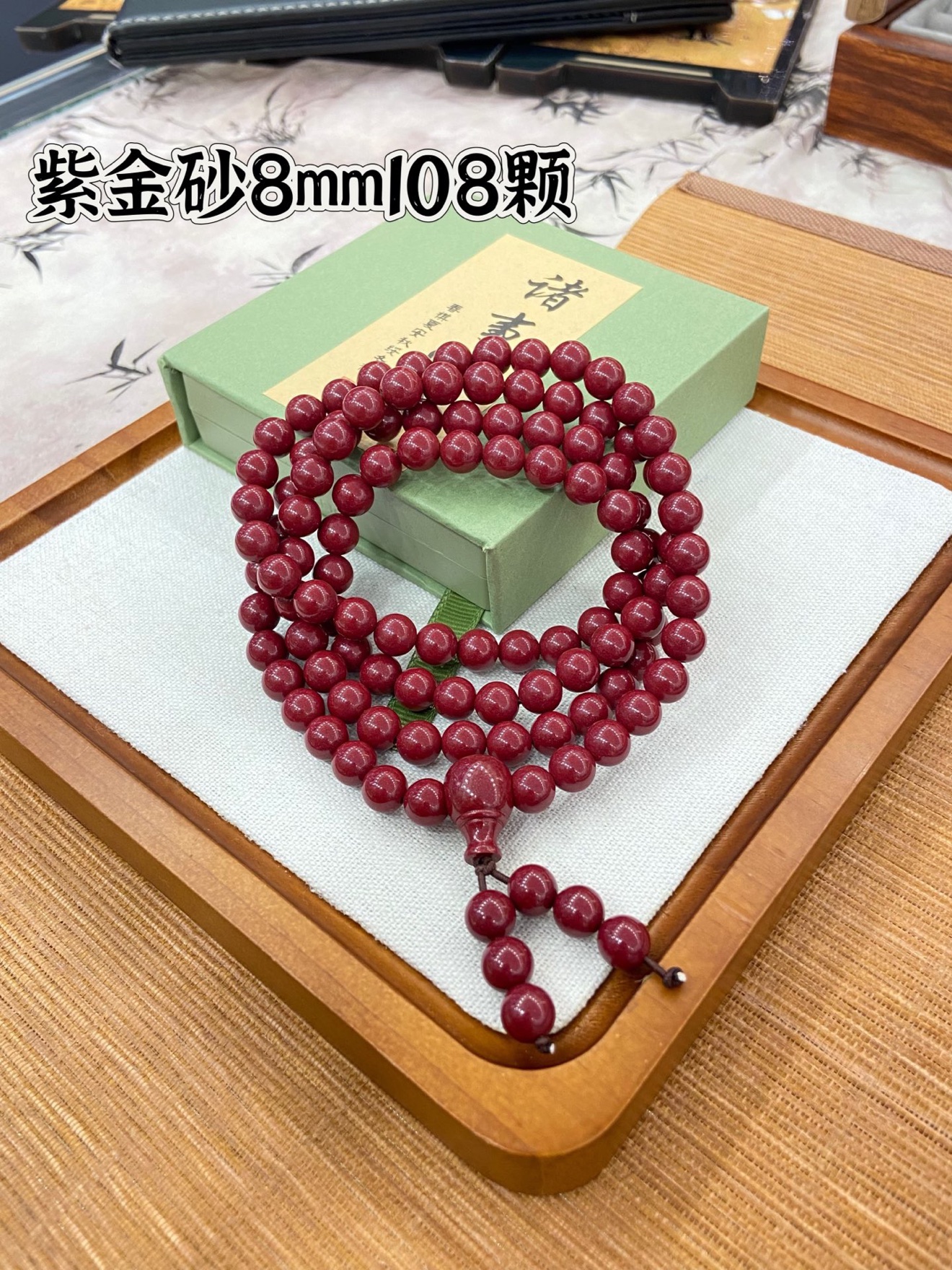
A Tibetan mala is a loop of 108 beads used in Buddhist practice to count recitations, one bead at a time. It ends at a larger guru bead, is worn long as a necklace or wrapped at the wrist, and is one of the oldest bead traditions in the world. This guide covers the 108 count, how counting works, how to wear one, and the materials — including where cinnabar, the traditional Chinese red, fits in.
Last updated: 21 November 2026
What is a mala?
Mala is Sanskrit for 'garland'. In Tibetan Buddhism a mala is the practitioner's counting tool: a closed loop of beads, traditionally 108, finished with one larger guru bead (the three-holed bead where the two ends meet, often with a small tassel or a tail of 'disciple beads'). Shorter wrist malas of 27 or 54 beads exist for carrying around; the full 108 loop is the classic form, worn long as a necklace or wrapped several times around the wrist. ZenWrist's home tradition is Chinese rather than Tibetan, but the 108-bead form is shared across both — our cinnabar 108-bead mala guide covers the Chinese cinnabar version in depth.
Why 108 beads?
108 is one of the most repeated sacred numbers in Asian traditions. The explanation most often given in Buddhist teaching: there are 108 earthly afflictions or worries (kleshas) that cloud the mind, and each bead turned is one of them set down. Other traditions count 108 Upanishads, 108 names of deities, or note that 108 is 1 × 2² × 3³ — a number that divides neatly for partial rounds. Whatever the lineage, the practical effect is the same: a full loop is a complete, unhurried unit of practice — long enough to settle into, short enough to finish. We present this as cultural background; a mala is a counting tool and a piece of craft, and we make no claims about effects.
How to count with a mala
The classic method is simple and tactile:
- Drape the loop over the fingers of one hand, starting at the bead next to the guru bead.
- One recitation, one bead: with the thumb, pull the next bead toward you as you complete each repetition of a mantra, a name, or simply a counted breath.
- Work around the loop until you arrive back at the guru bead — one full round of 108.
- Do not cross the guru bead. Tradition treats it as the teacher's seat: to continue, turn the mala around and count back the other way.
- Keeping bigger counts: traditional strands add marker beads or clip-on counters at intervals (often after 27 beads) so long sessions can be tallied in rounds.
None of this requires any particular belief. Plenty of people use a mala purely as a focus anchor — 108 slow counts, one bead at a time — the same way others use a breathing count.
How to wear a mala
Three everyday ways: long as a necklace (the full loop hangs to mid-chest — the classic look); wrapped at the wrist (a 108 loop wraps three to four times, depending on bead size — 6mm wraps finer, 8mm bolder); or carried in a pouch for practice. Customs vary by tradition — some keep the mala off the floor and out of the bathroom as a mark of respect, and folk custom in China usually puts bead strands on the left wrist ('left-in, right-out'); our which-hand guide explains that saying. Treat the customs as etiquette, not rules: a mala you actually use beats a perfect one kept in a drawer.
Materials — and where cinnabar fits
Tibetan malas are most often sandalwood, bodhi seed, rosewood, lotus seed or stone (turquoise and coral colours are classic accents). Chinese bead tradition shares the form and adds its own materials — amber beeswax, Hetian jade, and cinnabar: the deep-red mineral China has carved for centuries, prized for its colour and for taking fine hand carving. A cinnabar mala is therefore a meeting of the two traditions: the shared 108-bead Buddhist form, in China's traditional red material. ZenWrist makes the full count in natural cinnabar — plain strands in the three cinnabar sands (purple-gold, classic red, imperial red) and finer translucent grades — listed with exact materials and bead counts on our pendant and necklace pages. Cinnabar is soft (Mohs 2–2.5), so a cinnabar mala is a counted, kept piece rather than a rough daily beater; what cinnabar is, and its wearing precautions, are covered in our cinnabar safety guide.
Caring for a mala
The rules are the same across materials: keep it dry (take it off for showers, swimming and sports — water and sweat age the cord first, then the beads), wipe with a dry soft cloth after wearing, and store it coiled in a pouch, away from perfume and household chemicals. For cinnabar specifically, avoid hard knocks — it is softer than most gemstones — and keep it out of prolonged high heat. Full detail in our cinnabar care guide.
Frequently asked questions
Do you have to be Buddhist to use or wear a mala?
No. A mala is a counting tool from Buddhist (and Hindu) practice; people of any background wear one as jewellery or use the 108-count as a focus exercise. Wearing it respectfully — not on the floor, not as a toy — is the only etiquette that matters.
Why do some malas have 54 or 27 beads?
They are fractions of 108 — a half or a quarter round — strung as shorter wrist malas for portability. The full 108 loop is the traditional complete form.
What is the guru bead for?
It marks the start and finish of the loop. The two ends of the strand meet in it; when counting brings you back to it, the round is complete. Tradition says not to count across it — turn the mala and go back the other way.
Is cinnabar a traditional mala material?
In Chinese tradition, yes. Tibetan malas are usually wood, seed or stone; Chinese 108-bead strands (念珠/佛珠) have long also been made in cinnabar, amber and jade. A cinnabar mala follows the same 108 form in China's traditional red material.
Can I wear a 108 mala every day?
Yes — with the usual bead care. Wear it long or wrapped, keep it dry, take it off for showers, sleep and sports, and store it in a pouch. Cinnabar is soft, so avoid knocking it against hard surfaces.
Related: cinnabar 108-bead mala: meaning & picks · which hand to wear it on · cinnabar care guide · shop pendants & necklaces