ZenWrist / Guide
The ultimate guide to cinnabar
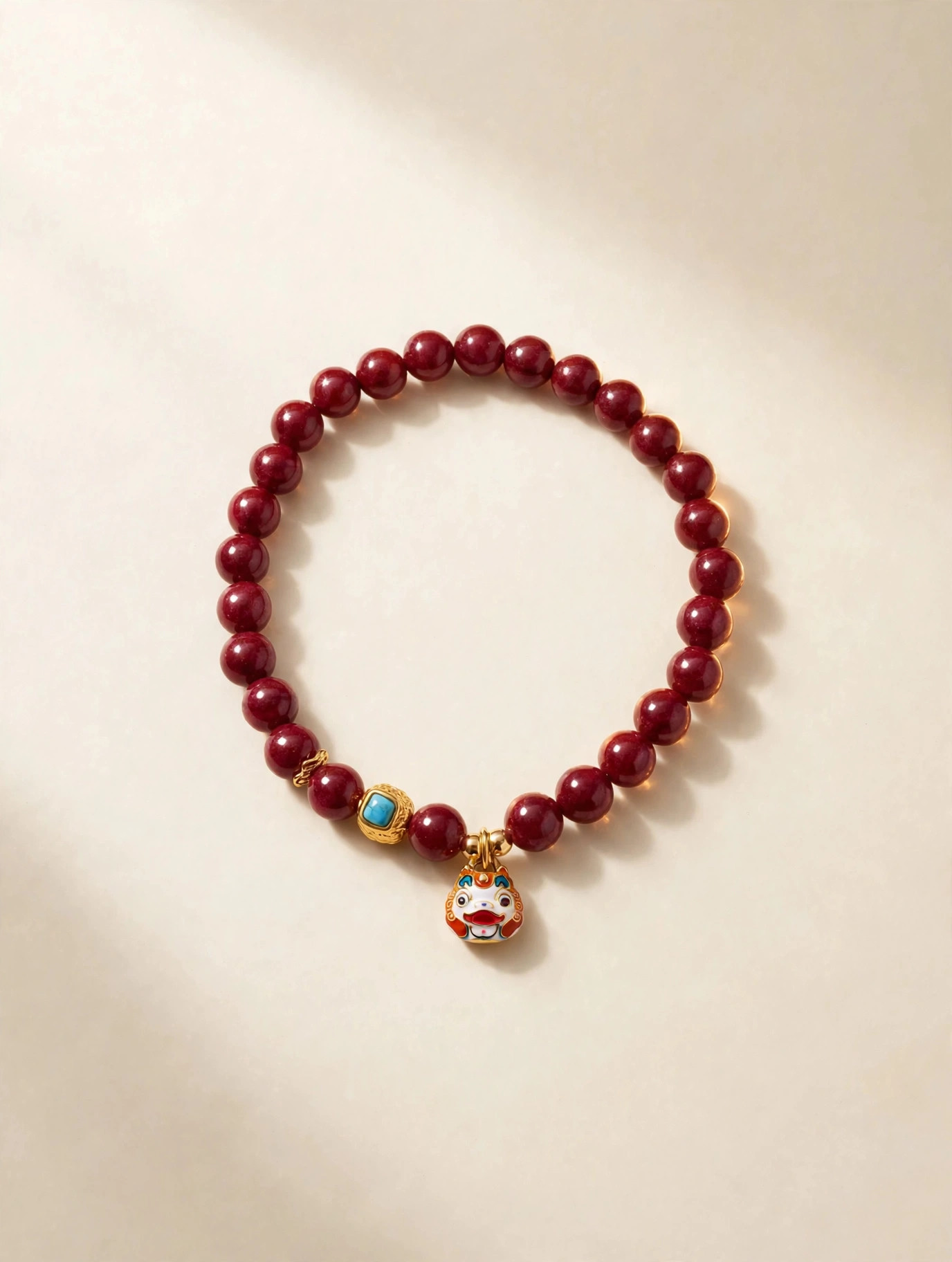
Everything about cinnabar on one page: what it is, whether it is safe to wear, which types exist, and how to choose, wear and care for a piece. Each section links to the detail guide if you want to go deeper.
Last updated: 22 November 2026
What cinnabar is
Cinnabar — known in Chinese as 朱砂 (zhūshā), and as the mineral cinnabar or 辰砂 (chénshā) — is mercury sulfide (HgS), a naturally occurring mineral with a distinctive deep-red color. China has carved and ground it for pigment for centuries, in Taoist and artistic traditions, and the red of cinnabar is the red of imperial seals, temple lacquer and classical painting. In Chinese tradition it is described as pure Yang material: a symbol of protection, vitality and clear boundaries. ZenWrist's cinnabar is reconstituted cinnabar — natural cinnabar mineral, purified and pressed into beads that can be carved and worn — and we say so on every product page. A tested sample measured about 97% cinnabar content (ITC report no. 31520829414; results apply only to the tested sample). Cinnabar is soft (Mohs 2–2.5) and noticeably heavy for its size — that cool weight in the palm is one of the first things people notice, and one of the checks in our authenticity guide.
Is cinnabar safe to wear?
The short answer is in our cinnabar safety guide: yes, for normal external wear with simple precautions. The mercury in cinnabar is chemically bound to sulfur inside the mineral crystal — it is not free liquid mercury, and solid cinnabar does not dissolve in water or release vapor at everyday temperatures. The precautions are simple: never put a piece in your mouth, never heat it deliberately, and stop wearing it if it chips or breaks. As a precaution, pregnant and nursing people, and small children, should not wear cinnabar. We make no medical or health claims about wearing cinnabar; if you have health concerns, consult a qualified professional.
The three cinnabar sands ZenWrist sells
We describe our cinnabar by sand — the color and look of the material, not a content promise. Purple-gold sand (紫金砂) is a deep red-purple with a metallic shimmer; classic red sand (红砂) is the bright traditional red; imperial red sand (帝王砂) is a brighter, more saturated red used for carved pieces. The differences are color and appearance — see the side-by-side in our sand comparison and the fuller types comparison. A note on words: most red 'cinnabar' jewelry on the market is lacquer or dyed resin rather than mineral cinnabar at all — our cinnabar vs vermilion guide explains the four red materials and how we label ours.
How to choose a cinnabar piece
Start with the intention, then the fit. For protection and wealth symbolism, the carved pixiu bracelet (#03, $59.90) is our most-chosen piece; the peace buckle pendant (#78, $69.90) is the quiet everyday choice; the zodiac bracelet (#47, $149.90) carries your birth-year animal. Sizes are fixed per piece — 6mm for #03 and most everyday bracelets, 8mm for most others — and our size guide explains how to measure your wrist. Wear it on the left wrist by the traditional 'left in, right out' saying (see which hand). Before you buy, check the three authenticity points in our authenticity guide — weight, color, and lab testing — and the real price bands in our price guide (everyday pieces $59.90, carved imperial-red pieces $229.90, collector pieces $499.90 and up).
Wearing and caring for cinnabar
Take it off for showers, swimming, sports and sleep, and keep it dry — water and sweat age the cord first, then the beads. Wipe with a dry soft cloth after wearing, put perfume and lotion on before the bracelet, and store it in its own pouch, away from harder stones that can scratch it. Cinnabar is soft, so avoid hard knocks. For the car, our car hangings are made for the job: the gourd car hanging (#15, $59.90) and the ping-an car hanging (#162, $105) hang from the rear-view mirror — hang them securely, keep them from striking the glass, and keep them out of prolonged direct sun or heat on the dashboard. Full detail in our care guide and cleaning guide.
Frequently asked questions
Can pregnant women wear cinnabar?
As a precaution, we advise pregnant and nursing people not to wear cinnabar jewelry. The same applies to infants. This is a precaution for minerals that contain bound heavy metals, not a medical diagnosis — if you have health concerns, please consult a qualified professional.
Can cinnabar get wet?
Brief contact with water is fine — a quick rinse or a wipe with a damp cloth will not harm it. Do not soak it, and take it off for showers, swimming, sports and sleep. Water and sweat age the cord first and dull the polish.
Can cinnabar be kept in a car?
Yes — our car hangings are made for cars. The gourd car hanging (#15, $59.90) and the ping-an car hanging (#162, $105) hang from the rear-view mirror. Hang it securely so it does not strike the glass or obstruct your view, and keep it out of prolonged direct sun or heat on the dashboard.
What is the difference between cinnabar and vermilion?
Cinnabar is the mineral, mercury sulfide (HgS); vermilion is the name of the red pigment made from it. The two words were used interchangeably for centuries. Most red 'cinnabar' jewelry today is lacquer or dyed resin, not mineral cinnabar — the full comparison is in our cinnabar vs vermilion guide.
How can I tell if cinnabar is real?
Three checks: it feels noticeably heavy and cool in the palm; the red is deep and uneven, not flat candy-red; and the seller can show third-party lab testing. Our authenticity guide explains all three — and why we do not recommend the flame or water-soak tests. Our test certificates are on the certificates page.
Related: is cinnabar safe to wear? · cinnabar material & safety · how to tell real cinnabar · cinnabar vs vermilion · how to choose a cinnabar bracelet · test certificates